Hey all, and welcome to another blog post. Today I wanted to deviate a little and focus on a subject that, in my opinion, is quickly becoming a mutual enemy of creativity: AI.
To a degree, the many recently surfacing capabilities of AI are fascinating and fun. You can throw in a bunch of your pictures and have an AI generate ‘new art’ based on your pictures. Write in a prompt, and AI will create a story based on your input. Some people probably see this and think, “Wow! I don’t have to spend thousands on hiring artists or writers when I can just have AI do the work for me!”
And therein the problem lies. I’m seeing game devs create video game art by ‘training’ an AI on what they want their game to look like. Sure, for a broke Indie game dev, this can be the difference between a game being possible and impossible. They don’t have to pay people and they get industry-level design for their game. So where is the issue? This art doesn’t just get ‘created’ by an AI – it is generated from the art of professional artists that exist on the internet.
True, not every piece of art on the internet is owned specifically by an artist, but many are. You can even see it in the trending images of putting your photos into an AI for it to generate art of it. Many of the pictures feature skewed watermarks and signatures from the artists it took from. It scans from data anywhere on the internet, using user input to ‘train’ itself into making better responses. You can create an increasing amount of specific art by feeding an AI more and more data. Even if you were to use your own art to try to train it, AI pulls from the internet for similar data. This exists all over the place – Facebook, Twitter, Youtube, TikTok, and every other app we abuse constantly pulls data from us. Our interests, likes, the kind of content we absorb the most, why we like what we like, and endlessly more. The length of data that social media pulls from us is another topic entirely, but you can start to paint an image of how much AI has at its disposal.
As an example, for some game dev work, I experimentally wrote out some ideas into an AI to see what it made of them. Maybe it could spark up some ideas? I was stunned to see that the AI shamelessly took names from big facets of media, like the names of the races in Mass Effect. That was about it for me – I’d rather brainstorm and get the real thing. How easy would it be to like the sound of a name the AI gives you and roll with it, only to find out the hard way that it’s directly taken from another source?
There’s also this from the recent remaster of Final Fantasy 7: Crisis Core. Even Square is going this route?
Trying to use AI-generated art for your own media can, and should, only end badly. What you end up using is a skewed mangling of other artists’ creations. See the guy who published a book almost fully generated by AI. One site says that at first, he made it as a cool present for his niece, but eventually chose to monetize and brag about it. How he trained 3 different AI to Frankenstein together a children’s book. Artists are divided, but many are just sickened. The rest of us are working ourselves to tears, slaving over the keyboard, tablet, or pen and paper to create art from our very soul, things that will eventually make us proud. A lot of us aren’t even going to get proper recognition or even make a living – but now our online material is threatened, too?
What can an artist even do? I have art out there. I have previews of my books, old drafts, tons of content that I put out there in the hopes that it’ll garner some attention towards the books I worked on for most of my life. Now, entering new areas of the creative world like creating D&D campaigns, game design, and even poetry, my area of work is coming under a huge threat. AI is supposed to be an ally to us. AI is what game devs are supposed to create to emulate what choices NPCs make in a tactical RPG, not to make the game itself. I don’t want to take my content down – how would I be able to work through social media with nothing online?
There doesn’t seem to be an accurate way to ensure AI art is even credited, either. What would the generator do, display all the links of the art it used to generate? Would the user even look it over? Give the artists a follow, at the very least, for contributing?
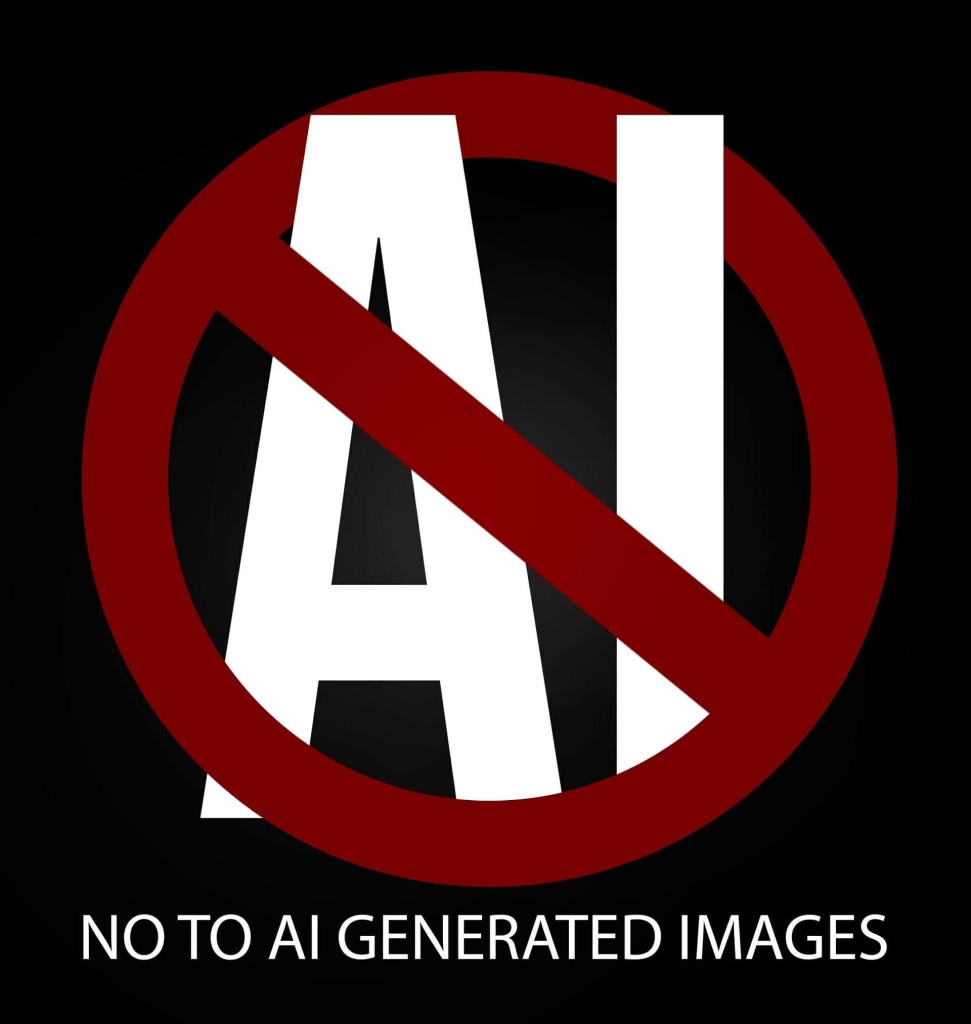
The sad truth is, many employers and people seeking this kind of content might just settle with AI. Like we saw some decade (or so) ago, self-checkouts wreaked havoc on the customer service industry. Machines have continually risen to take over more and more jobs that were once man-powered. Now, an author can put some prompts into a generator and come up with a full half-decent story. Game devs can ‘train’ an AI to create free or cheap art for their video games. Some of them are even decent. So what if they pay for an app? They’re not paying for the art or creativity – they’re paying to steal content. That’s like picking the lock to someone’s house and insisting you paid for the lockpicks. I personally vote that we say no to AI at this stage.
What are your thoughts? Are we content creators overreacting, or are we on the verge of a dystopian era where machines can even stomp out our creativity? What would you do if your art or ideas were regurgitated into new media that someone didn’t even consult you for? That AI just shamelessly ripped from your website, from passages of your e-book preview on Google Books? Let me know in the comments!

 Sovereign Soul
Nice post.
LikeLike